Making EVs Even ‘Cooler’
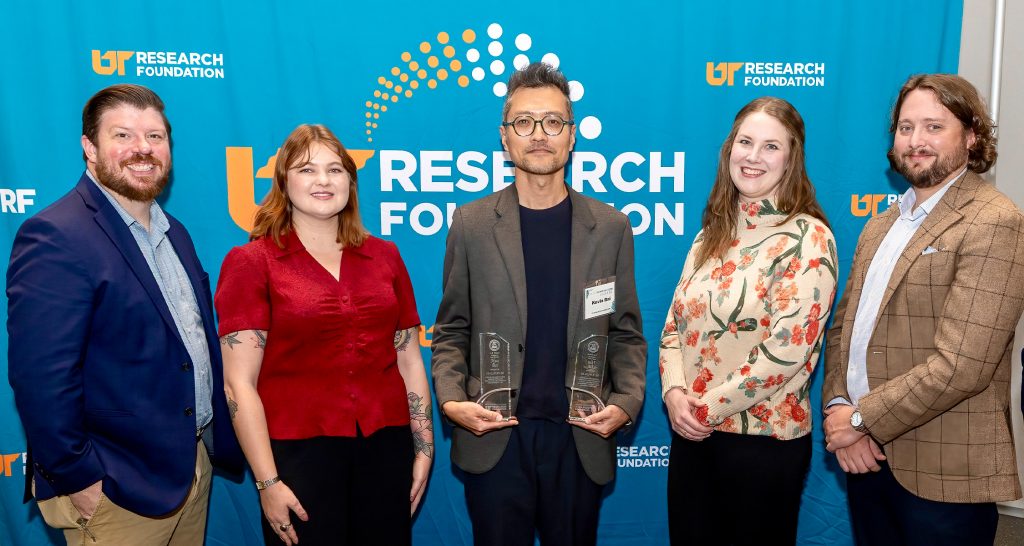
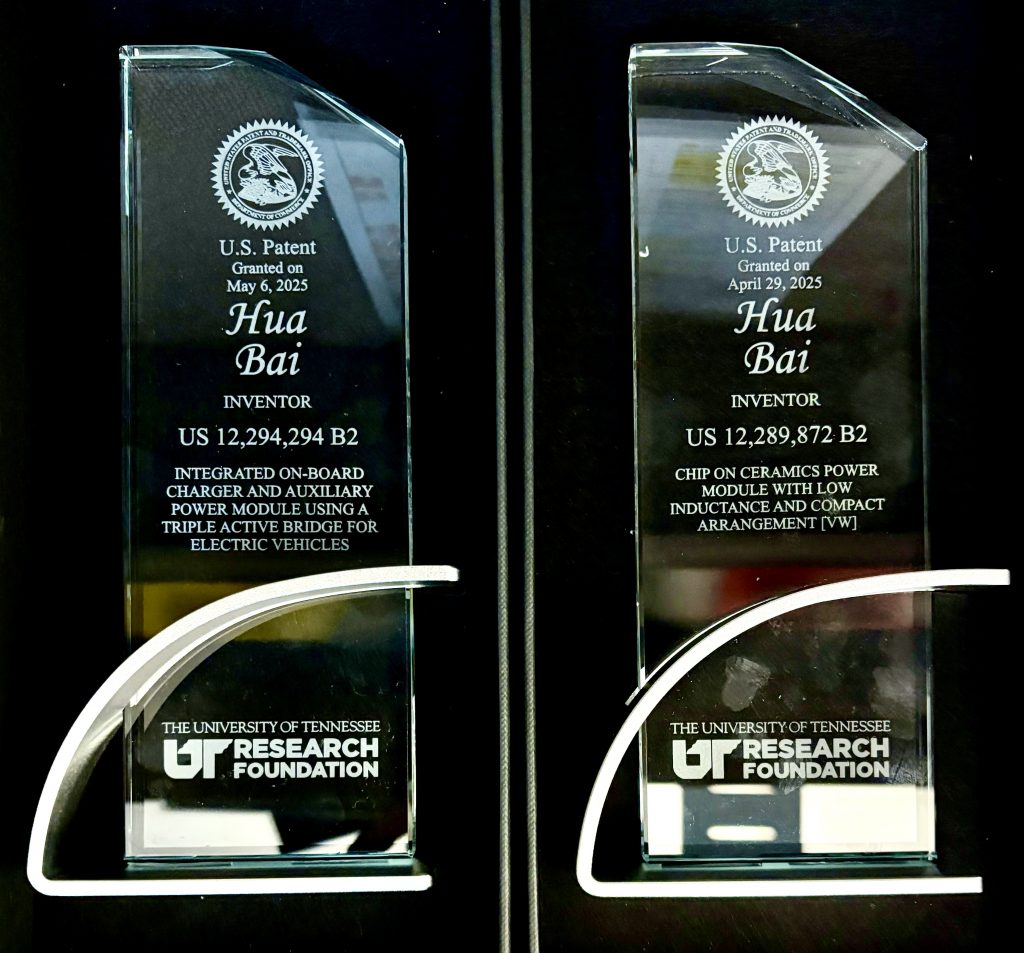
Last year, Min H. Kao Department of Electrical Engineering and Computer Science Professor Hua “Kevin” Bai’s laboratory patented two technologies that will improve electric vehicle (EV) charging and power conversion.
Bai and his lab members have been actively applying and licensing the patents with their automotive industry collaborators, FORVIA HELLA and Volkswagen Group of America, to accelerate the impacts of the new technology.
“Industry researchers have a good sense of end users’ needs,” Bai said. “During collaborations, our industrial partners can guide us toward technology with real applications, which expedites the development of products once we arrive at the final design.”
Thanks to these patents and his previous innovations, Bai was also inducted as a fellow of the National Academy of Inventors last year.
“This is the highest honor of my academic career so far,” said Bai. “More importantly, it is the result of many patents generated through industry collaborations and then licensed back to the companies. Therefore, this title is also an acknowledgement of our close and effective collaborations with the automotive industry, and our broader contributions to society and the economy.”
Free Electric Flow in EVs
EV chargers convert the AC electricity coming from the power grid into high-voltage DC power, allowing it to be stored in the car’s main battery. A DC-DC converter inside the car splits some of the stored power off to a smaller, low-voltage battery that supplies energy to power steering, GPS, and other small electronic systems.
One of Bai’s new patents uses a coupled transformer to integrate the AC-DC and DC-DC converter units, reducing the cost and size of the car’s electrical components. The new technology was developed in collaboration with FORVIA HELLA, a European automotive component supplier that jointly holds the patent with Bai’s lab.
“This construction also allows power to flow freely between the AC grid, high-voltage car battery, and low-voltage car battery,” Bai explained. “That can be extremely useful if the propulsion battery is low; the low-voltage battery can kick in to provide extra power to get the vehicle the last few miles to a charging station.”
Cooler Semiconductors
EV chargers and internal DC-DC converters are able to convert power types and voltages thanks to semiconductor devices. As with any electronic device, these create heat during operation but cannot operate reliably if they get too hot.
Conventional off-the-shelf devices usually have bare dies (blocks of semiconductor material with integrated circuits) packaged within a thermal substrate; this package is mounted on a thermal interface material, then coupled to a heatsink. As the semiconductor operates, excess heat transfers to the heatsink.
Unfortunately, the extra layers of material slow heat transfer away from the die, which can actually contribute to overheating and shorten the die’s lifespan.
In collaboration with Volkswagen Group of America, which jointly holds this patent, Bai’s group removed several layers from this assembly.
“Our patented method directly solders the die to a specialized ceramic material with microchannels that coolant liquid can flow through, removing heat more effectively,” said Bai.
Contact
Izzie Gall (egall4@utk.edu)