
New Faculty Apply AI to Agriculture, Healthcare, Neuromorphic Technology
This fall, the University of Tennessee welcomes four new faculty members to the Min H. Kao Department of Electrical Engineering and Computer Science (EECS): Associate Professors Hongkai Yu and Benjamin (Ben) S. Riggan and Assistant Professors Yi Huang and Tianci Liu.
Yu, Riggan, Huang, and Liu were hired as part of UT’s transdisciplinary Cluster Initiative, which unites faculty from multiple disciplines in groundbreaking collaborative research.
Hongkai Yu
Yu earned his PhD in computer science and engineering from the University of South Carolina in 2018. As an associate professor at Cleveland State University, Yu founded the Cleveland Vision & AI Lab, which focuses on the real-world applicati

ons of computer vision, machine learning, deep learning, and artificial intelligence. In 2025, he was listed in the Stanford/Elsevier Top 2% Scientists List for his work in artificial intelligence and image processing.
Yu joins the EECS faculty as a member of the Plant Ecosystem Resilience in a Changing Environment Cluster, which aims to enhance food security by accelerating development of stress-resistant crop plants and other cutting-edge technologies.
“Ever since high school, I’ve been interested in using science and engineering to solve real-world problems,” Yu said. “When I come to UT, I will continue research in computer vision, robotics, and machine learning, and I will apply them to the interdisciplinary area of agriculture and forest systems.”
For example, Yu is interested in developing AI-enabled autonomous vehicles tha
t can monitor a variety of environmental factors around a farm, then translate the information into recommendations that farm managers can use to optimize plant growth and yields.
He will also continue a National Science Foundation grant he received last year to create a robot arm that uses computer vision and AI to help greenhouse managers monitor growing tomatoes.
Yu looks forward to supervising and teaching Engineering Vols at both the undergraduate and graduate level. While a strong foundation in mathematical formulas and engineering methodologies is key, Yu incorporates animations and video demonstrations to make his lectures interesting and emphasizes practical applications when possible.
“Making the class solid, interesting, and practical—that’s my teaching philosophy,” he said. “This fall semester I will be teaching digital system design, (which) will involve hardware, software, simulation, and real-world projects.”
Yu is looking forward to exploring the excellent fishing spots around Knoxville and shooting hoops in the hometown of the Women’s Basketball Hall of Fame.
Benjamin Riggan
Riggan grew up in the Carolinas and earned his PhD in electrical engineering from North Carolina State University. His research focuses on the intersection of optical physics, AI, and defense, including nighttime facial recognition and recognition in
low-quality images. He has an extensive background in national security and law enforcement applications of image recognition technology.
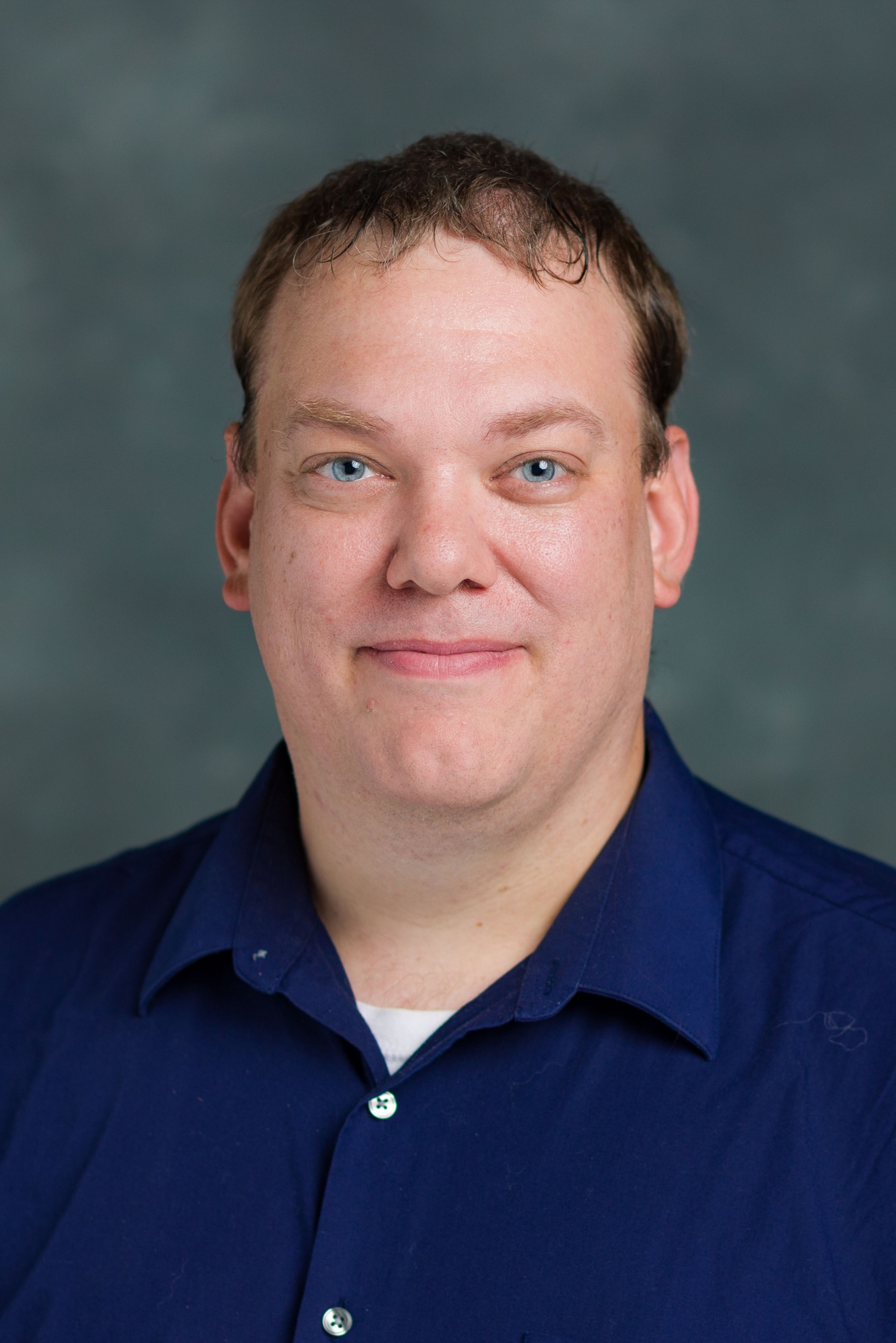
After working in multiple branches of the United States Army Research Laboratory (ARL) and as an assistant professor at the University of Nebraska-Lincoln, Riggan has a strong research network within the domain of national security, intelligence, and law enforcement. He has also worked with policymakers, helping them understand how biometric technologies work and how to implement them ethically.
“Ever since I got my PhD, (working at the) University of Tennessee has been my long-term goal,” Riggan said. “Being part of the strong community of EECS and the growing AI initiatives at UT—and, really, statewide—is what motivated me most.”
At UT, Riggan will continue his research on AI-supported image recognition, including his ongoing project to translate daylight images into the thermal domain to improve nighttime facial recognition.
As a member of the Resilient Agriculture and Forest Systems Cluster, he will also expand his expertise into precision agriculture, building livestock-monitoring systems and other AI-supported tools that will preserve national food production and security.
In the classroom, Riggan focuses on real-world problems, helping students see where they can apply the dense technical curriculum to their career goals. He emphasizes opportunities outside the classroom, encouraging students to take part in laboratory research, internships, and co-ops rather than getting stuck in the university “bubble.”
Part of that encouragement is being honest about his own experiences—even if they aren’t always flattering.
“I’m just a guide to help (students) along their educational journey. I’m not trying to come across as a perfect person,” he said. “I love to share stories of all the mistakes I’ve made, so the students can learn from those mistakes.”
After years living on the plains of Nebraska, Riggan is delighted to be back near the Smoky Mountains, where he looks forward to hiking, fishing, and camping.
Yi Huang
Huang earned his PhD in electrical and computer engineering from the University of Massachusetts Amherst, where he received the Ting-Wei Tang Dissertation Prize. His research focuses on developing next-generation AI hardware inspired by the human brain—encompassing not only neuromorphic hardware and software design but AI applications. 
“I was drawn to this field by the striking gap (in energy demand): modern AI demands enormous amounts of energy and data, while our brains learn efficiently from limited experience,” Huang explained. “My ultimate goal is to (build technology that will) approach the brain’s energy efficiency and cognitive capabilities, enabling AI across a range of everyday applications.”
Huang’s efforts in developing adaptive, energy-efficient systems for next-generation AI computing will contribute to the Foundational AI Cluster, which applies lessons from early childhood cognitive neuroscience to advance embodied learning in AI.
“I have always been fascinated by how theoretical knowledge can be applied to everyday electronic devices to solve real-world problems,” he said. “UT offers an unusually strong environment for interdisciplinary, full-stack research, which I believe is essential for success in the AI era.”
During his bachelor’s and master’s programs at Huazhong University of Science and Technology in China, Huang relished every opportunity to work creatively on real-world problems. He plans to extend similar opportunities to Engineering Vols in the classroom, offering his students close mentorship and support while they explore their interests.
“(A) combination of curiosity and hands-on creativity inspired me to become an engineer,” Huang said. “I encourage curiosity, collaboration, and independent thinking, while providing close mentorship and the freedom for students to pursue ambitious ideas and develop their own research identities.”
As an ACE-certified personal trainer, Huang is excited to explore the Smokies through hiking, biking, and camping, “sharing active, healthy experiences with students and colleagues.”
Tianci Liu
Liu, who earned his PhD in electrical and computer engineering from Purdue University, draws on a background in statistics to apply quantitative methods to real-world problems. His research focuses on knowledge-centric AI, particularly investigating how large language and multimodal models acquire, update, and apply knowledge to new tasks. 
“This interest is motivated by a fundamental challenge in today’s AI systems,” Liu said. “Even highly capable general-purpose models can struggle to adapt effectively to specialized tasks and domain or user-specific needs.”
Domain-specialized and adaptable AI will be important tools in addressing many of the world’s pressing challenges. Liu is a member of the Precision Health and Environment Cluster, which is working to predict human health outcomes by aligning climate, social, lifestyle, and other data streams.
Liu will work to integrate knowledge-centric AI into precision (personalized) healthcare models, developing tools that can identify meaningful patterns within that ever-changing tangle of data—while ensuring that the models remain reliable, traceable, and responsive to individual users’ needs. His agile AIs will build on the work of nursing, epidemiology, health informatics, and other healthcare experts within the cluster.
“In areas such as precision health, evidence and recommendations can evolve quickly, and information from different sources may conflict,” he said. “UT (is) a place where I (know I can) build both a strong AI research program and meaningful interdisciplinary collaborations.”
Adapting to new and changing information is also a skill Liu promotes in the classroom, where he draws clear connections between core EECS concepts and cutting-edge AI research.
“I try to help students understand not only how a method works, but why it works and when its assumptions may fail,” he said. “My goal is for students to leave a course with both the technical foundation to use existing methods and the ability to critically evaluate and develop new ones.”
Liu is excited to explore all that his new home in East Tennessee has to offer, especially the many outdoor activities available in Great Smoky Mountains National Park.
Contact
Izzie Gall ([email protected])